A Soft Passage Through Arctic Stillness

-
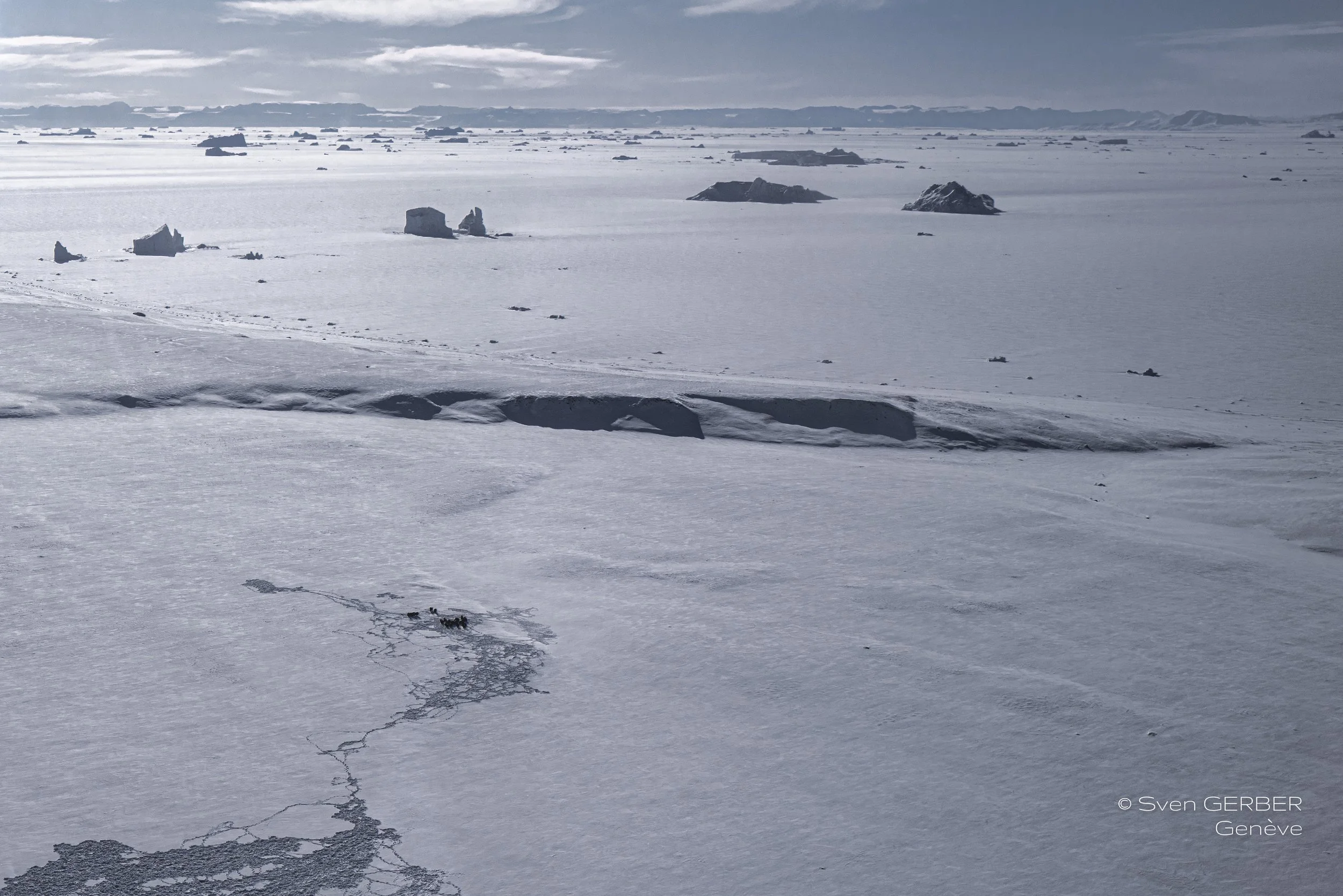
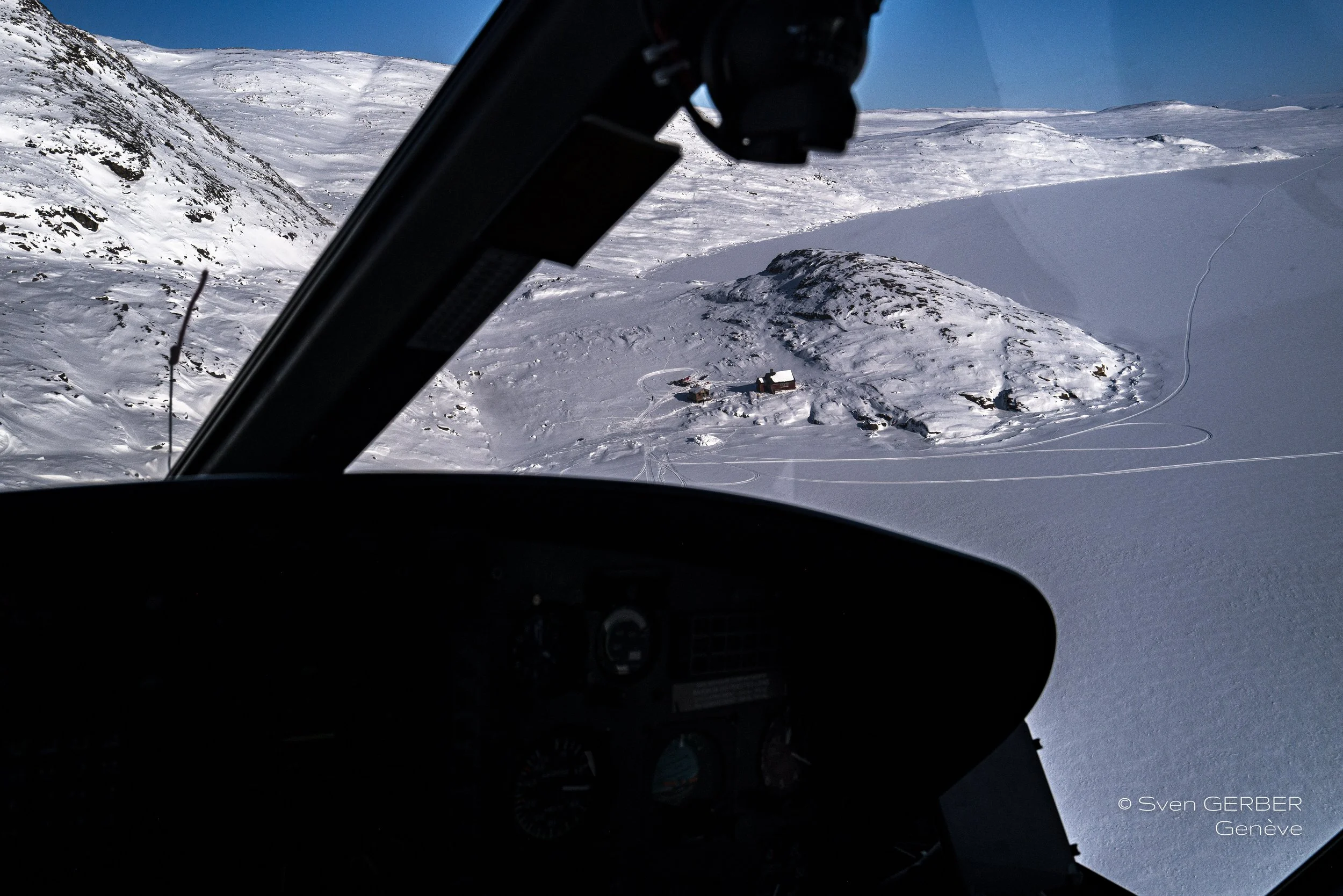
In March 2026, I travelled with a small group to East Greenland, to Scoresby Sund — Kangertittivaq — a place where distance is not an abstraction but a physical condition. For ten days we lived from an abandoned hut built in the 1950s, about one hundred kilometres from the nearest settlement. Around us stretched an arctic desert of mountains, icebergs, snow, wind and silence.
The landscape appeared reduced to its essential elements: light, cold, space and time. Each excursion by snowmobile required careful preparation. At temperatures around minus thirty degrees Celsius, nothing was casual. The body, the camera, the clothing, even the simplest gesture entered into direct dialogue with the conditions. The remote regions of the North have long formed the geographical and atmospheric resonance space of my work, and here this sense of reduction was almost absolute.
-
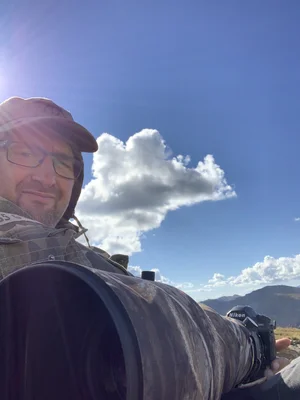
At the beginning of this observation, I made a small but immediate mistake: I began photographing without gloves. After only a few minutes, I could no longer feel my fingertips. In such an environment, carelessness is not theoretical. It becomes physical almost at once.
This brief experience sharpened my awareness of the place. The cold was not only a condition around the image; it became part of the act of seeing. Every movement had to be measured. Every exposure carried the pressure of the environment.
-
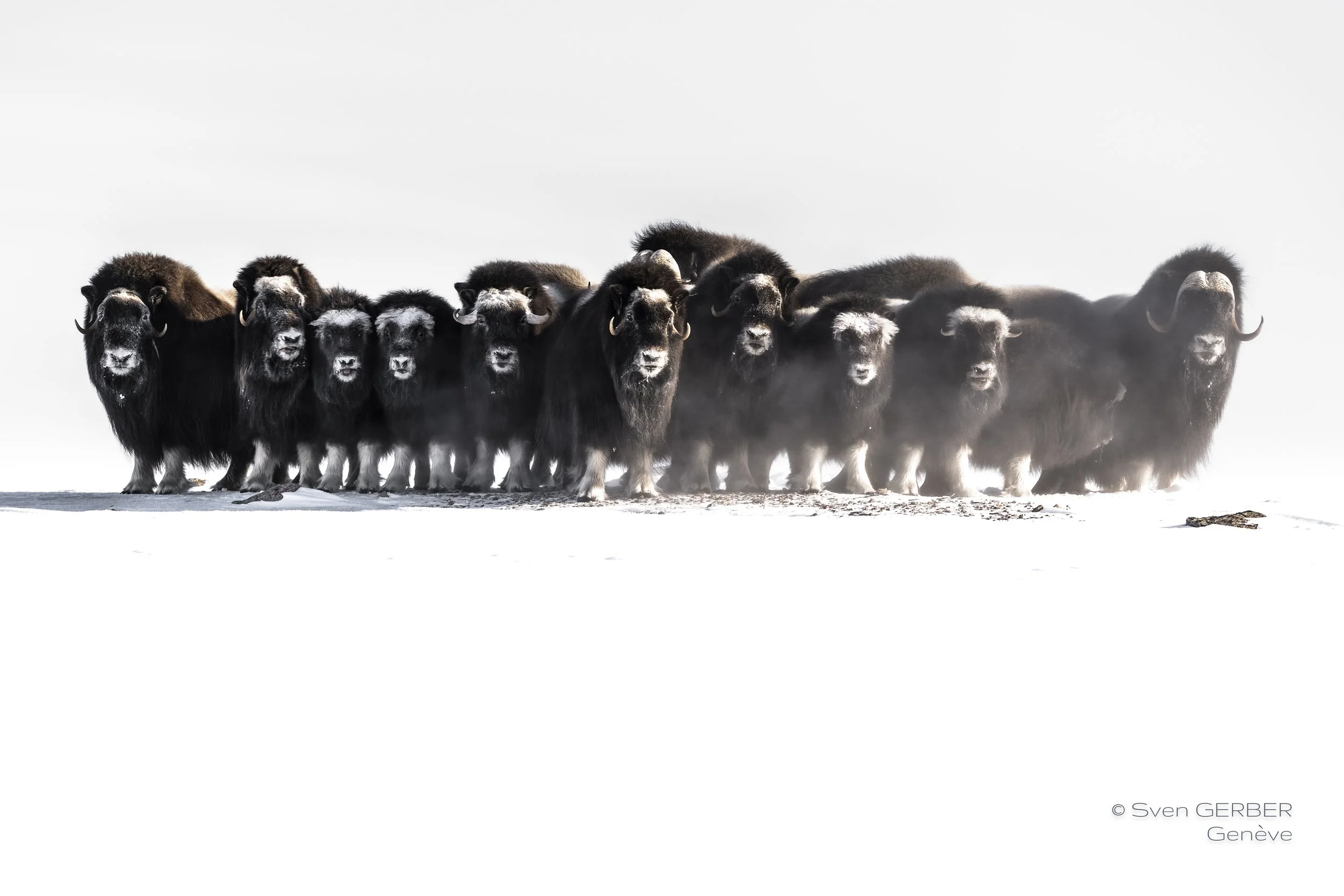
Already from the helicopter, we had seen herds of musk oxen moving across the white ground below. A few days after our arrival, we set out toward one of these herds. After walking with our equipment through the snow, we positioned ourselves near the animals and waited.
The herd observed us with calm alertness. There was no drama, no sudden event, only a slow unfolding of presence. After some time, the animals began to move and passed in front of us. At that moment, three musk oxen crossed behind a rock completely covered in snow. Their bodies disappeared almost entirely into the whiteness of the landscape. For a brief instant, only their heads, horns, fur and the trace of movement remained visible.
-
Camera : Nikon Z9
Lens : Nikkor Z 400mm f2,8 TC VR S
Exposure time : 1/6sec.
F number : f/18
ISO : 32